I spent years building websites for businesses, which mostly meant I spent years watching people fall in love with a demo.
The WordPress theme demo was a particular kind of beautiful. Photography that had obviously been art-directed. A six-word headline. Every section holding exactly the right amount of text, buttons landing precisely where your eye already was, and the whole thing looking like a website somebody had paid thirty thousand dollars for. It cost fifty, maybe a hundred, and a business owner could buy it on a Tuesday afternoon and reasonably conclude that the hard part was over.
Then the business moved in.
The six-word headline became two paragraphs, because the company actually had something complicated to explain and no interest in explaining it in six words. The art-directed photography got swapped for whatever was sitting in the shared drive. Somebody needed another section on the homepage. Somebody else needed the contact form to land in the CRM. Search mattered. The mobile layout broke in a way nobody noticed for a month. Two plugins disagreed with each other. A small change on one page created a strange problem on a different page, and the person who asked for the change had no way of knowing it would.
That last part was always the hardest to explain. A client asking to change the color of a button wasn't being naive; they were looking at the part they could see. My job was everything attached to it: the same color quietly doing work in the navigation and the links, the contact form that a plugin rendered with styles of its own and wouldn't match anymore, the hover state nobody thinks about until it looks wrong, whether the new color could still be read on a phone in daylight, and all of it checked before anyone could call the change finished.
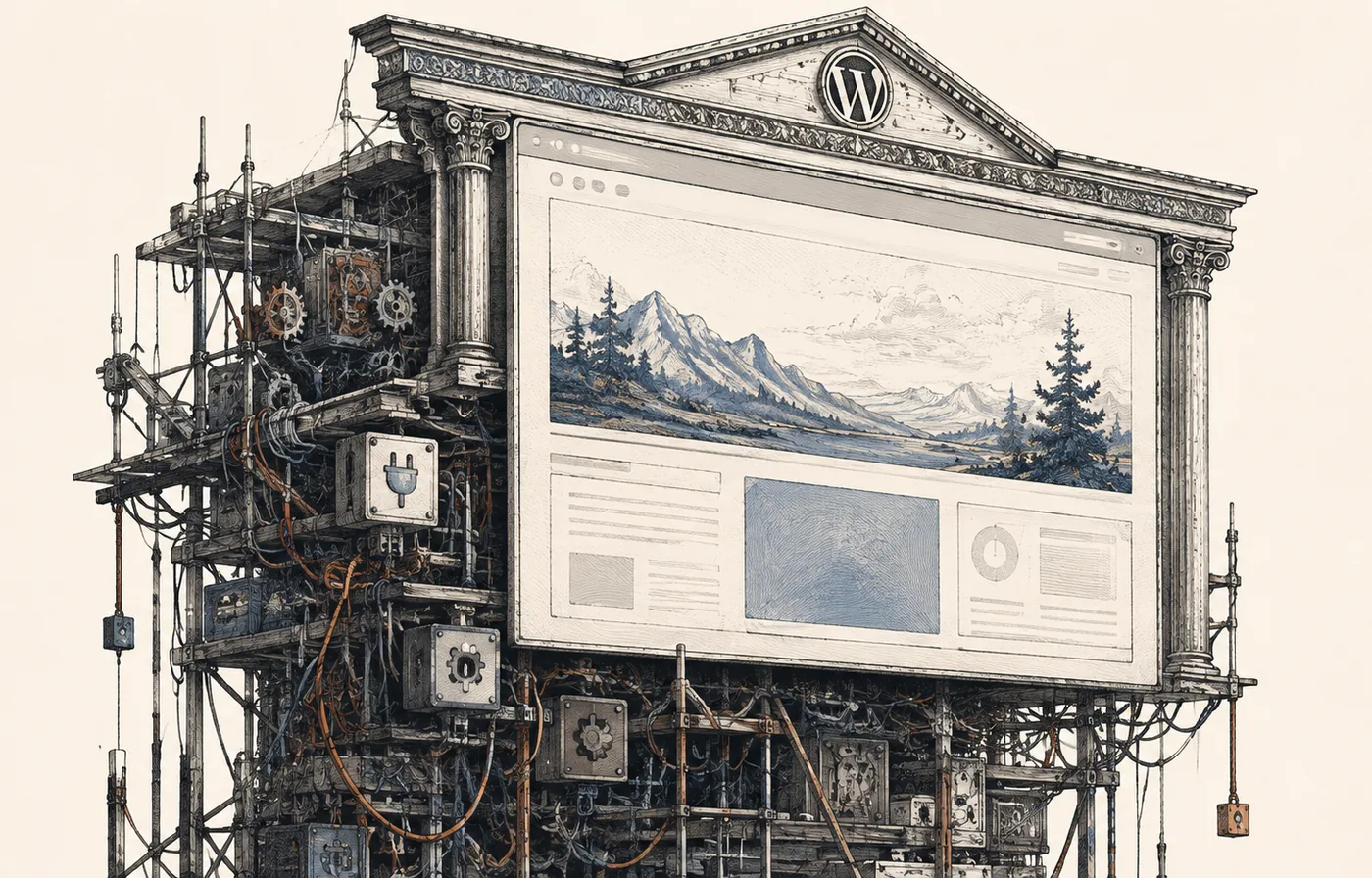
None of which means WordPress failed. It did something genuinely important. It took a capability that used to require a real budget and put it within reach of almost anyone, and it made experienced developers considerably faster, because we stopped rebuilding the same fundamentals on every project. What it never did was make the judgment cheaper. It moved the starting line and left the finish line exactly where it was.
HubSpot is the same shape at a larger scale, and I say that as someone who has spent years working inside it. You sign on a Monday and you own a CRM, marketing automation, email, landing pages, workflows, reporting, lifecycle stages, and lead scoring, capabilities that once meant several vendors and a budget most companies didn't have. What you actually own on Monday is a very good set of tools and a project. Someone still has to decide how the data should be structured, what a qualified lead means in your business specifically, why the reports don't match what the sales team believes, and why the database contains the same person four times. Squarespace, Wix, Shopify, pick your platform: every one of them sold a genuine capability and quietly included a project in the box.
I keep coming back to the pattern lately, because we're running it again with far more powerful tools and much higher stakes.
The friendliest front door we've ever built
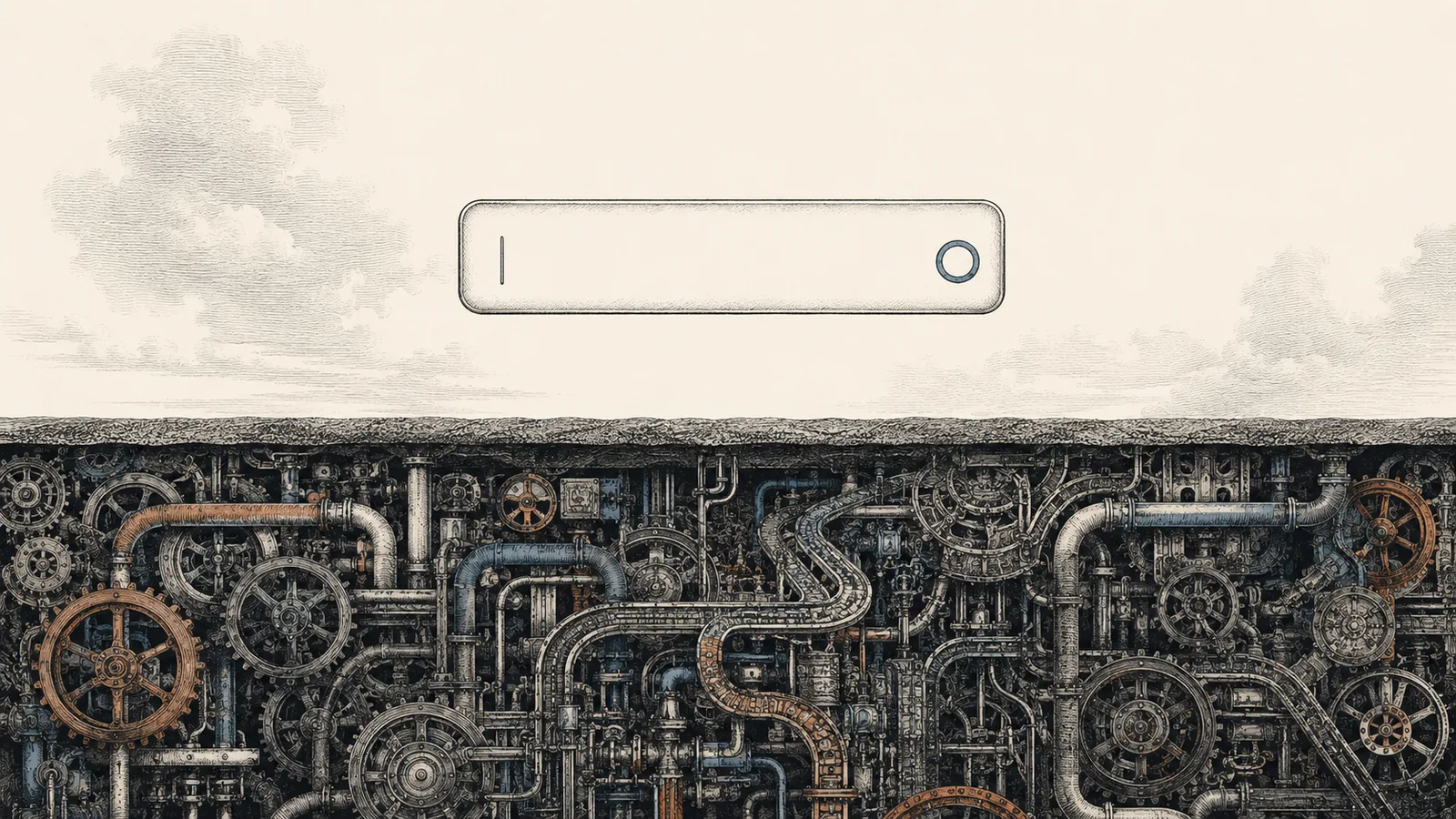
AI may be the most approachable powerful technology anyone has produced. There's a box. You type in it. A few seconds later you've got something that would have taken a specialist hours, maybe days, not so long ago: a first draft, a research summary, an analysis of a contract, working code, or a tangible version of an idea you've been carrying around for years.
I don't want to hedge that part. It's remarkable, and almost everyone should be using it. People with no programming background are building software, and small companies are producing work that used to require a team they could never afford. The distance between having an idea and seeing it exist has collapsed, and I have no interest in any argument that treats that as a problem. The trouble starts one step later, when the quality of that first result convinces us that everything behind it must be equally easy.
Asking for an answer vs. automating the work
Getting a model to draft a customer email is one thing.
Now ask for the right email, one that uses what that customer bought and when, current pricing, the policy about what you do and don't promise in writing, and the history of the relationship. It needs to notice that this particular account is in a billing dispute and stop. It should ask a person before anything sends, record what it did afterward, and behave the same way on the four hundredth email as it did on the first.
Nothing in that second paragraph is exotic. It's an ordinary description of how work actually happens inside a company. But we've left the blinking box behind, and we're now designing a piece of how the business operates, with access to real information, the ability to take real action, and consequences that land on people who were never in the room when it was built. An answer engine and a system that can reliably get work done inside your business aren't the same product, and the gap between them is where most of the actual effort lives.
The stakes are different too. A bad website might leave you with a broken form, some lost search visibility, and an embarrassing mobile layout. A badly built AI system can be wrong at scale, confidently, in front of customers, with your data behind it. That doesn't make the technology something to fear, but it does make the difference between experimenting and putting something into production worth taking seriously.
Expertise didn't disappear. It got leverage.
There's a version of this argument that slides into gatekeeping, and that isn't the one I'm making. The point isn't that regular people should leave AI to the professionals.
What actually happens when tools get easier is that expertise gets leverage. WordPress didn't only help beginners build websites; it made good developers faster, because they got to start farther ahead. AI is doing the same thing at a far larger scale. A marketer who genuinely understands customers can test twenty ideas in the time it used to take to test two, and an operator who has run a process for fifteen years can finally turn what lives in their head into something repeatable. The expert's advantage was never typing speed. It's knowing what good looks like, what's missing, what will break, and when an answer that reads beautifully is quietly wrong.
Which is why the goal shouldn't be to turn every business owner into an AI engineer, any more than WordPress meant every business owner had to become a web developer.
A mechanic shouldn't have to become a marketer because AI can now generate marketing. What the mechanic has that nobody else does is the shop itself: why customers come back, which jobs are worth chasing and which ones eat an entire Thursday, the five questions every customer asks before they decide to trust the place, and whatever it is that has actually built the reputation over the years. That's the expensive knowledge, and it took a long time to accumulate. Spending Saturday learning API authentication isn't a good trade for it. The better version is putting what that person knows together with people who understand marketing, systems, and AI well enough to turn it into something that runs.
So the complexity doesn't vanish. It becomes somebody's job.
That's the work we do at Spark Evolution. We start with how the business actually runs: what people know, where that knowledge lives, what keeps eating time, what depends too heavily on one person, and where a better system would create real leverage. Then we work out together what should become more automatic, what should stay human, and what the company can safely depend on. Sometimes the answer is small. Sometimes it becomes something like our Executive Second Brain, which takes the knowledge already sitting inside a business and makes it usable without handing the owner responsibility for all the machinery underneath it.
WordPress really did make websites easier to build. It never made every website good.
AI is opening a much larger door. The promise is that extraordinary capability is becoming available to far more people. The trap is believing that because the front door became simple, everything behind it did too.
Kurt Milligan is co-founder and CEO of Spark Evolution. If something here matches a problem you are carrying, start a conversation.