There are periods when history moves gradually. A tool improves, a process becomes faster, a new competitor enters the market. Businesses adjust, people learn, and life continues with a slightly different shape.
Then there are moments when the environment itself changes.
The Industrial Revolution was one of those moments. It did not simply introduce better equipment. It changed how goods were made, where people lived, how wealth accumulated, how labor was organized, and which nations held power. Societies that had been largely rural and agrarian became increasingly mechanized and urban. The transformation created extraordinary prosperity, but it also brought pollution, displacement, dangerous working conditions, and social upheaval on a scale that took generations to understand. (History)
We know the shape of that transformation because we are looking backward. The people living through it did not have that luxury. For them, industrialization was not a neat chapter in a history book with a beginning, middle, and end. It arrived unevenly. Some people saw possibility where others saw ruin. New industries appeared while old ways of making a living disappeared. The consequences accumulated slowly enough to be argued about and quickly enough to change entire lives.
They were standing inside history. So are we.
A change in the environment
Artificial intelligence is still often discussed as though it were a new category of software. We compare models, prompts, copilots, agents, subscriptions, and productivity gains. We debate which company is ahead, which tool is worth paying for, and which new capability changed since last Tuesday.
Those conversations are useful, but they can obscure the larger story. A new kind of capability is entering nearly every form of knowledge work at once. Machines can engage with language, interpret information, create content, identify patterns, manipulate data, and assist with decisions in ways that would have been difficult to imagine as everyday business tools only a few years ago.
That matters because technology changes behavior long before anyone agrees on what to call the change.
A small company can now produce work that once required a much larger team. A person with deep expertise can extend that expertise farther. Someone without a technical background can build things that previously required specialized skills. Information can be examined, reorganized, summarized, and acted upon at a speed that changes what customers and employees will eventually expect as normal.
Some jobs will change. Some business models will become less defensible. New ones will appear. The value of certain skills will rise while others become easier to reproduce. Much of this will happen unevenly, and probably less cleanly than either the evangelists or the skeptics expect.
This is why I think the software framing is too narrow. We are not simply watching another category of business technology emerge. We are watching the conditions around businesses begin to change.
The moth that recorded a revolution
One of the most enduring records of the Industrial Revolution can be found in something remarkably small.
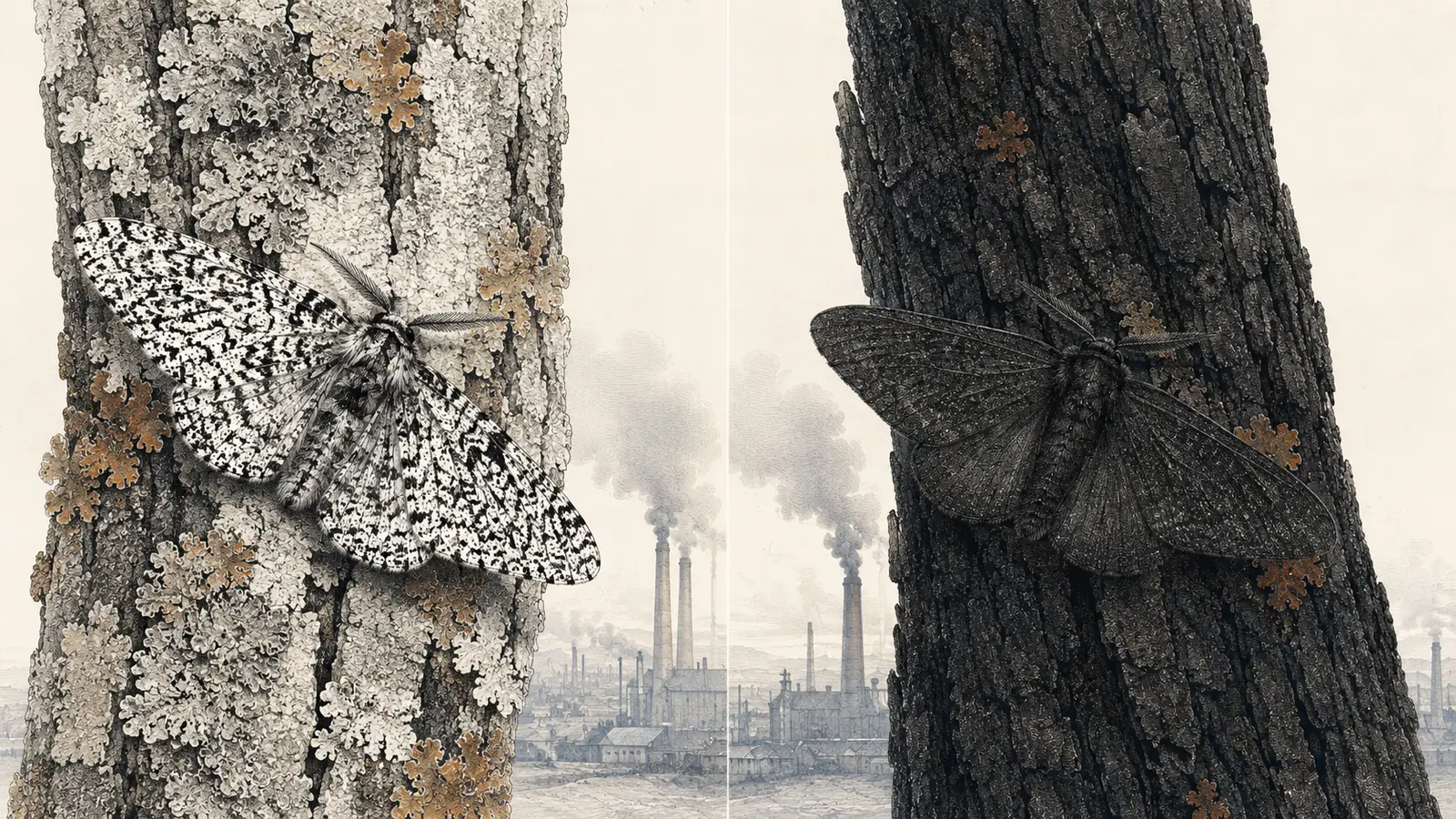
The peppered moth was commonly found in a pale, speckled form that blended well against the light, lichen-covered surfaces of its environment. As coal pollution spread across industrial Britain, soot darkened trees and buildings while lichens declined. Against that altered background, darker moths were often better concealed from predators, and over time the dark form became increasingly common in heavily polluted areas. (Nature)
The moths, of course, knew nothing about industrialization. They did not understand factories, economics, coal, or the enormous social forces reshaping Britain. No individual moth looked at a soot-covered tree and decided that becoming darker would be a sensible strategic response.
The environment changed, and across generations the population changed with it.
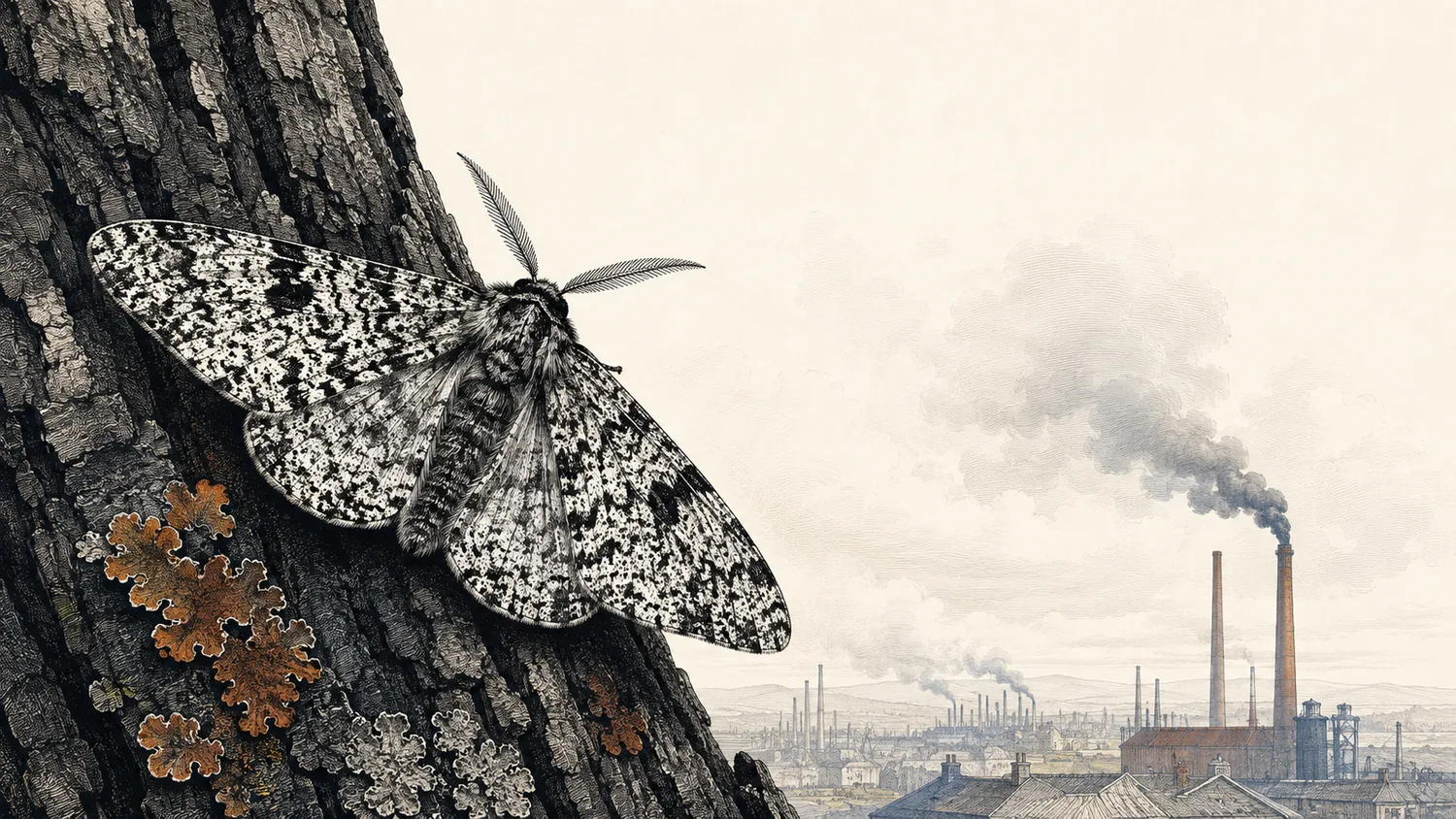
What makes the story especially useful is what happened next. As pollution controls improved, lichens returned and surfaces became lighter again. The advantage shifted, and pale moths became more common.
The lesson was never that darker moths were superior. Darkness happened to fit one version of the environment; when the environment changed again, so did the advantage.
That distinction matters when we think about business. Adaptation is not a race to change the most. It is the ability to notice what the environment now rewards, what it punishes, and which parts of you still belong in the world that is emerging.
Adaptation is not panic
Moments of technological change are fertile ground for fear. Every new capability seems to arrive with predictions that professions will disappear, businesses will collapse, and anyone who fails to adopt the latest tool immediately will be left behind.
Fear is very good at producing activity. It is much less reliable at producing judgment.
We can already see the result. Companies buy AI tools before deciding what problem they are solving. Leaders announce AI strategies that have almost no relationship to how work actually happens inside their organizations. Teams automate broken processes, create enormous quantities of new information, and mistake the resulting motion for transformation.
A business can become very busy with AI without becoming meaningfully better at anything.
Real adaptation starts somewhere less exciting: by paying attention to what has actually changed. What can a customer reasonably expect now that was impractical two years ago? Which assumptions about staffing, speed, expertise, or scale are becoming less dependable? Where does the organization possess knowledge or judgment that remains difficult to reproduce? Which parts of the business exist because they are valuable, and which exist simply because there was never another practical way to do the work?
Those questions require more than enthusiasm for technology. They require an honest understanding of the business itself.
The challenge is not to preserve everything or automate everything. It is to know the difference.
The danger of seeing too little
I do not think most businesses will be transformed because somebody inside them discovers the perfect prompt.
The larger opportunity begins with something most companies already possess in abundance but manage poorly: their own knowledge.
In an owner-led business especially, intelligence is often scattered everywhere. It lives in the founder's memory, in a manager's instincts, in the spreadsheet only one employee really understands, and in the reasons behind an old decision that nobody thought to document at the time. It sits inside inboxes, meeting conversations, handwritten notes, old files, personal routines, and processes held together by people who have learned over years how to compensate for the system around them.
A surprising amount of what makes a company work may never have been turned into something the company itself can reliably access.
That was always a vulnerability. AI makes it more consequential because these systems become dramatically more useful when they have context. Without the knowledge of the organization, AI can produce polished but generic answers, make a bad process faster, or create the appearance of intelligence without the judgment that gives the work meaning.
The opportunity, then, is much larger than adopting a collection of tools. It is to make what the business already knows more usable: to capture important reasoning before it disappears, improve the way information moves, preserve the context behind decisions, and give people access to knowledge that previously lived only in someone else's head.
Once that foundation exists, AI becomes much more interesting. It is no longer merely generating something. It is working with the accumulated intelligence of the business.
Evolution without erasure
This is also where I think much of the current conversation about AI goes wrong. We spend enormous energy imagining what can be removed: fewer people, fewer steps, fewer hours, fewer costs.
Some of those efficiencies will be real and worthwhile. But if subtraction becomes the entire strategy, it is easy to automate away things a company did not realize were valuable until they were gone.
The organizations best prepared for this period will not necessarily be the ones that replace the greatest amount of human work. They will be the ones that understand what makes their people, judgment, relationships, experience, and institutional knowledge valuable, then use technology to carry those strengths farther.
That means changing some things aggressively and protecting others deliberately. A process that exists only because technology used to make something difficult deserves scrutiny. So does a process that looks inefficient on paper but quietly contains twenty years of judgment, trust, or customer understanding.
The hard work is knowing which is which.
For me, that is what responsible evolution looks like: greater capability without surrendering judgment, and better systems without stripping away the human character that made the business worth improving in the first place.
The Industrial Revolution eventually altered nearly every dimension of society. It produced possibilities that would have been difficult for anyone at its beginning to imagine, along with consequences that took generations to recognize and address.
Artificial intelligence will not replay that history. No historical transformation does. But the comparison is useful because it reminds us how difficult it is to recognize environmental change while we are living inside it.
We do not yet know exactly which tools will matter five years from now, which companies will dominate, or which predictions about AI will eventually look ridiculous. We do know that the capabilities available to individuals and organizations are changing quickly enough to alter expectations, economics, and the way work gets done.
The businesses that navigate this well will not simply be the ones that adopt AI first. They will be the ones that understand their changing environment clearly enough to decide what should evolve and what deserves to endure.
That, ultimately, is what the peppered moth has to teach us. Not that darker is better. Not that newer is better. And certainly not that every change represents progress.
When the environment changes, standing still is also a choice.
Our work now is to notice what is happening, decide what deserves to endure, and evolve with intention.
Kurt Milligan is co-founder and CEO of Spark Evolution. If something here matches a problem you are carrying, start a conversation.