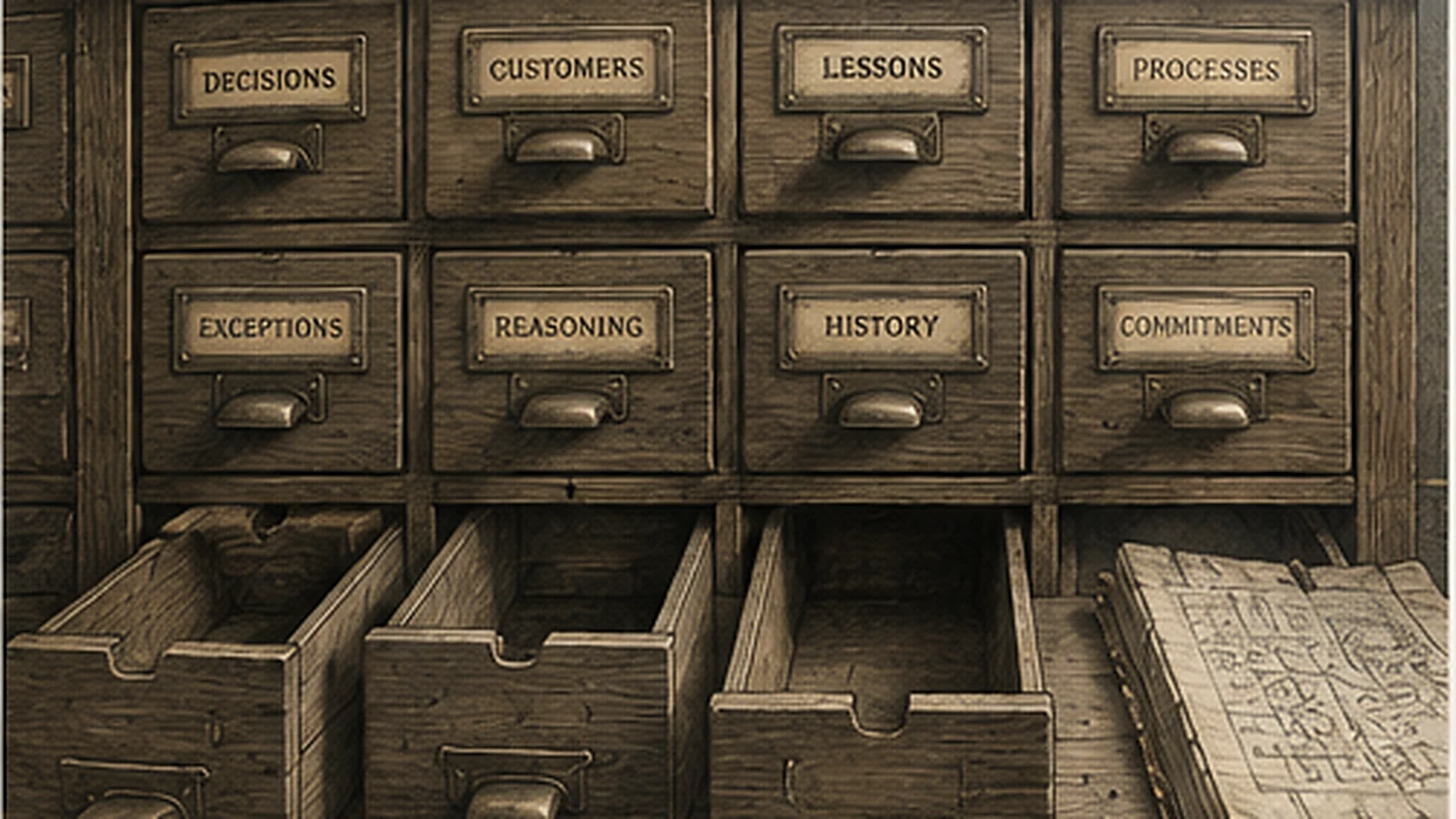
Someone leaves the company. Maybe they retire after twenty years, maybe they take another job. There's a farewell lunch, the laptop gets collected, the accounts get reassigned, and everyone assumes the transition will be manageable.
Then Monday comes, and people start asking questions.
Why does this customer get different terms than everyone else? Why did we stop using that vendor? Where does the number in this spreadsheet actually come from? Why does this process have an approval step nobody seems to understand? What happened the last time we tried to change it?
The documents all still exist. The spreadsheet is on the shared drive, the emails are sitting in an archive somewhere, and the contracts are exactly where they should be. What left the building was the context that made any of it make sense.
Most businesses don't think of this as a memory problem. They call it a documentation problem, a training problem, a process problem, or a key-person problem. Often those are different symptoms of the same underlying problem: the company learned something, often at considerable expense, and never built a reliable way to keep what it learned.
A company knows more than its files
We tend to think of business knowledge as the part that can be stored. Contracts, procedures, reports, customer records, project plans, meeting notes.
Those matter, but the most valuable knowledge in a company usually sits between the record of what happened and the reason it happened. A contract will tell you a customer received unusual terms without preserving the service failure that caused someone to offer them. A process will contain an extra quality check without explaining the expensive mistake that put it there. A project folder can show three abandoned approaches without telling the next team why each one failed.
Experienced people carry thousands of these connections around. They know which rules can bend, which customer cares deeply about something that never made it into the CRM, why the obvious solution was already tried four years ago, and why everyone should leave that strange spreadsheet alone unless Linda is in the building. That context isn't trivia sitting around the work. Very often it's the part that makes the work intelligent.
I spent years running into this from the outside. We'd inherit a company's marketing and CRM setup and find workflows nobody could explain, lifecycle stages that meant something specific to a person who had left, and a lead-scoring model built around an assumption that made sense in a year nobody could name anymore. The system was documented. What it never recorded was why any of it had been built that way, which left two bad options: rebuild from scratch, or carefully preserve decisions we didn't understand.
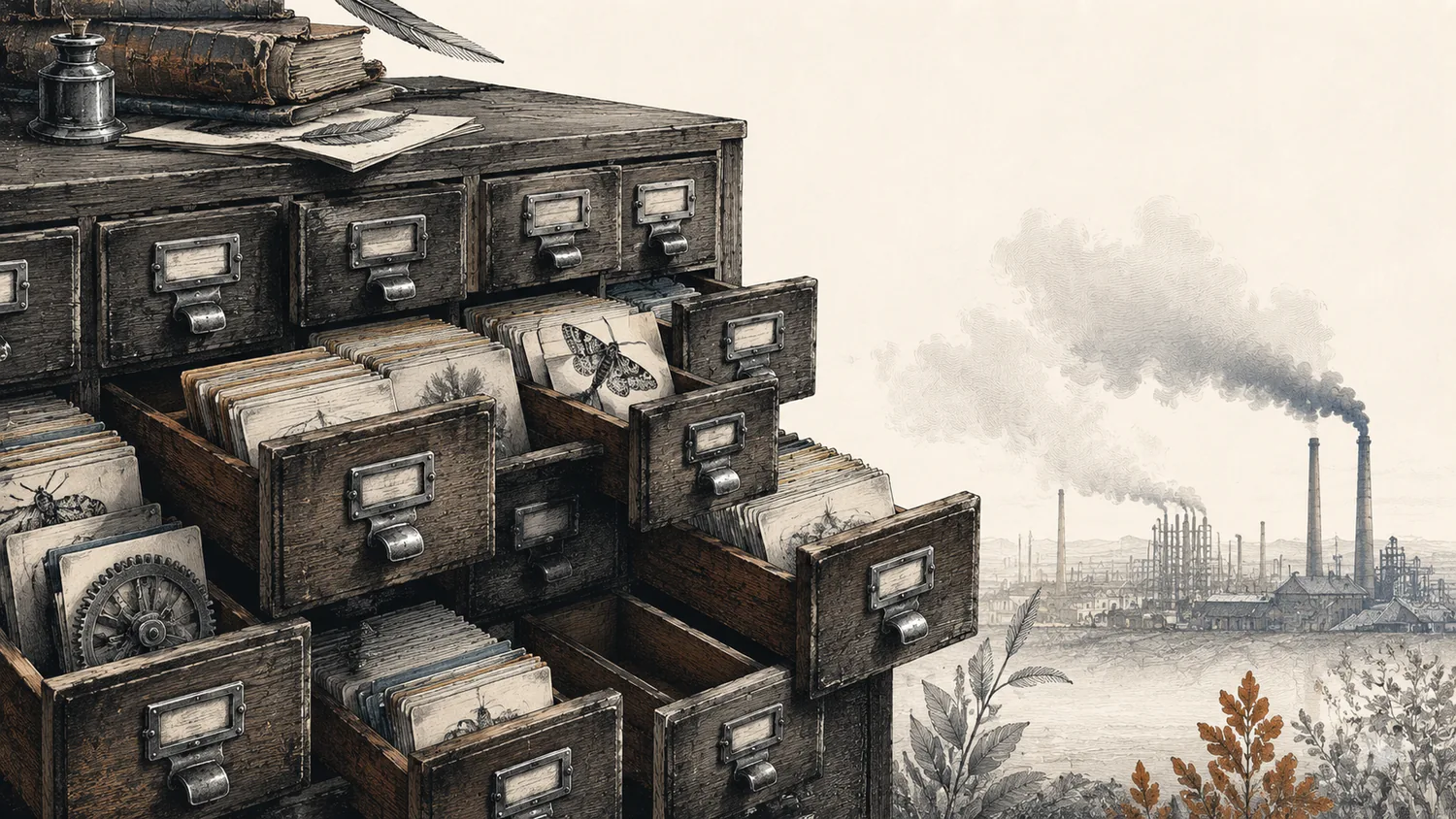
We've never been especially good at preserving that layer. We've built shared drives, wikis, intranets, knowledge bases, Notion workspaces, and elaborate folder structures, some of them genuinely excellent. The weakness has been practical rather than technical. Keeping them useful requires people to stop what they're doing and document what they just did.
Finish the meeting, then write up the decision. Solve the customer problem, then update the CRM. Change the process, then revise the SOP. Complete the project, then record what everyone learned, while the team is already thinking about the next deadline.
The theory is sound. The maintenance is where it falls apart.
AI changes something more important than note-taking
Go back to that first Monday question. Why does this customer get different terms than everyone else?
There was a day when that decision got made. Somebody weighed a service failure against the risk of losing the account, talked it through with two other people, concluded that the discount was cheaper than the churn, and moved on to the next thing. The decision reached the contract. The reasoning stayed in the conversation.
Until recently, capturing that meant adding a task to somebody's already full afternoon: now go write up what you decided and why. That's the barrier, and a major part of why knowledge bases go stale.
That barrier can get much smaller. If the thinking is already happening with AI in the room, comparing the options, drafting the note to the customer, working out what the account is actually worth, then a well-designed system can recognize that something worth keeping just happened, write the record, keep the reasoning attached to the decision, file it with the right customer, and surface it two years later when a new account manager asks exactly the same question.
The human doesn't disappear from that. Judgment matters more, not less, because not everything deserves to become permanent organizational memory. But the human contribution moves closer to "yes, that matters, keep it" and further from spending twenty minutes turning a good conversation into a document that somebody then has to file somewhere.
That sounds like a small improvement. I think it changes the economics of the entire problem. For decades we've built systems that get more useful only when people remember to maintain them. AI makes it possible for a company's memory to get more useful as a byproduct of people doing their actual work.
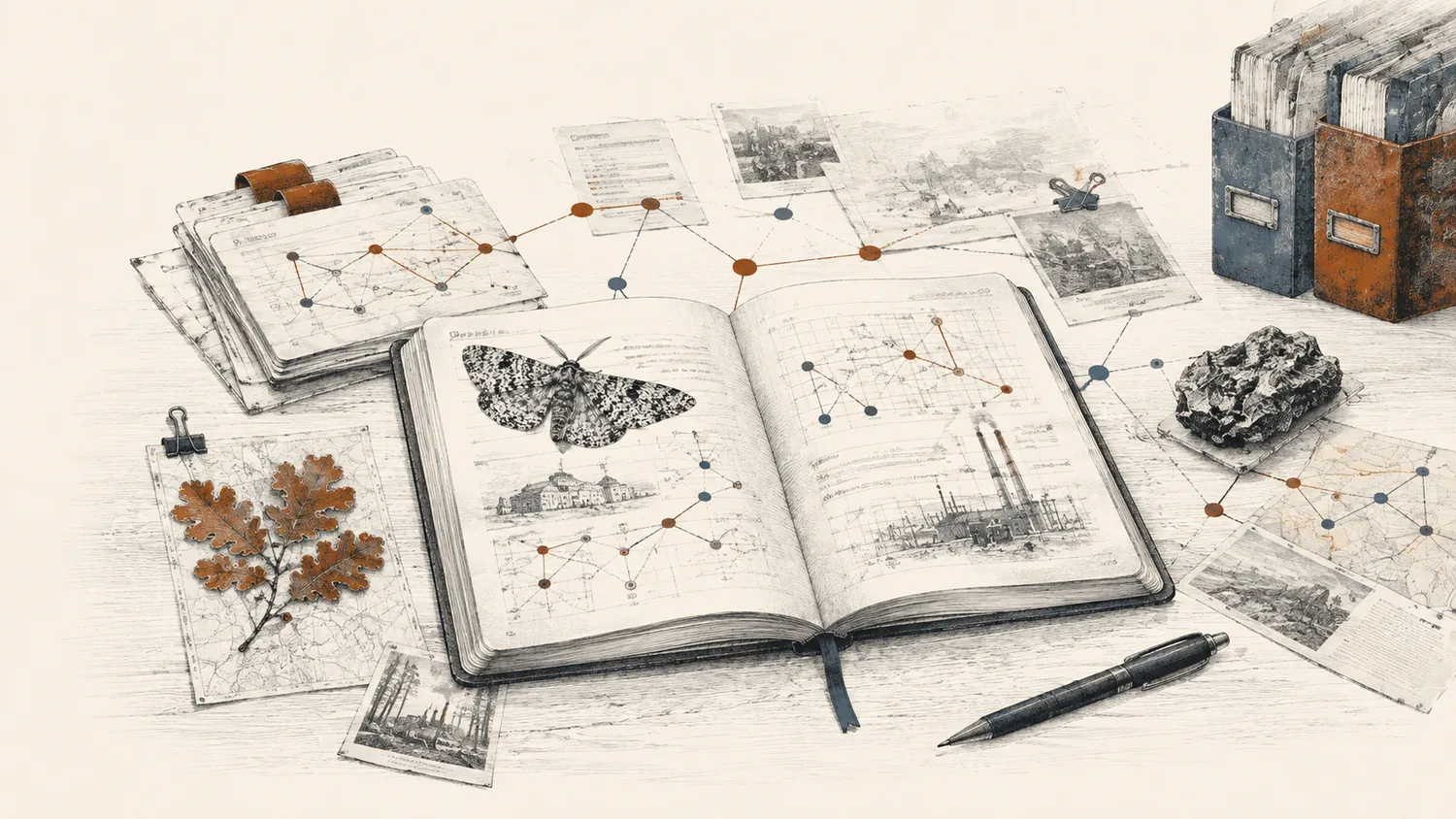
Sophisticated organizations are already working on this. In episode 231 of The Artificial Intelligence Show, Mike Kaput talked with Zapier's Dan Slagen about the company's AI-powered marketing brain, built to keep context about customers, competitors, campaigns, goals, and brand available to the tools and agents supporting the team. What struck me wasn't that Zapier landed on the word brain too. Slagen described changing how the team works and shares information, so that useful knowledge doesn't disappear into conversations the system can't see. The technology can capture and connect context. The organization still has to decide what belongs in its memory.
The model can know you while the business still can't remember itself
Anyone who uses AI regularly has started to feel a strange new kind of familiarity. The model learns how you like things written, recognizes the projects that keep coming back, remembers preferences, and holds enough continuity that using it feels less like opening a piece of software and more like continuing a conversation.
That's genuinely useful, and it hides something important.
An executive can have hundreds of valuable conversations with an AI about strategy, customers, hiring, and hard decisions. A manager can do the same thing in a different system. Someone in operations can build increasingly sophisticated assistants around their own work. Every one of those people gets more capable while the company stays exactly as forgetful as it was before.
The model can know you while the business still can't remember itself.
If the useful context stays scattered across individual AI accounts, inboxes, conversations, spreadsheets, and people's heads, we've only invented better places for institutional knowledge to disappear.
None of which means recording everything. Nobody needs a permanent archive of every passing thought and routine conversation. Useful memory takes selection: the decisions that shouldn't be made from scratch twice, the reasoning behind them, the exceptions worth understanding, and the customer context that changes what the right action looks like. A company shouldn't try to remember everything that happened. It should get much better at remembering what it can't afford to relearn.
That's the problem we built Spark Evolution's Executive Second Brain around. The goal is a durable layer of useful context that the business owns, with AI helping to capture it, organize it, connect it, and bring it back when somebody needs it. It works because experienced people still decide what deserves to persist and what doesn't.
The models will change and the tools will change. People will retire, move on, and take new opportunities. The understanding a business has already earned should be able to survive all three.
Every company will keep learning difficult lessons. It shouldn't have to keep paying to learn the same ones.
Kurt Milligan is co-founder and CEO of Spark Evolution. If something here matches a problem you are carrying, start a conversation.